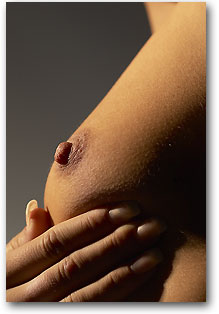
Breast Self Examinations:
IN THE SHOWER:
- Put one hand behind your head
- With the finger pads of your three middle finger, move your hand over the entire breast area
- Use the right hand for the left breast and vice versa
- Use a circle pattern, an up and down pattern, or start from the nipple as you press down and move fingers out and in. Choose the pattern that you and your healthcare professional find to be the best. Do it the same way each time.
- Check for lumps, knots or thickenings
- Report any changes or irregularities to your healthcare professional immediately
IN FRONT OF A MIRROR:
- With your hands firmly pressing down on your hips, check for changes in the shape, size, or skin texture of your breasts. Then raise your arms over your head and check again.
- Note any skin dimpling, swelling or redness.
- Check for changes in your nipples or unusual discharge
- Report any changes or irregularities to your healthcare professional immediately
LYING DOWN:
- Place a pillow or a towel under your right shoulder and your right hand behind your head
- Using your left hand, follow the same technique as in the shower
- Lower your right arm slightly and with your left hand, check your right underarm
- Check for lumps, knots, or thickenings
- Repeat on the other side
- Report any changes or irregularities to your healthcare professional immediately
-from the American Cancer Society
What to expect in a mammogram:
-I swear if men had to do this with their testicles, they would never agree to it and their would be an even larger outbreak in testicular cancer
Admittedly, it is not a good time (or a pleasant feeling), but it should not hurt.
- First you stand beside the machine with your shirt and bra off
- The technologist will help you to place your breast on a plastic plate (without even a hint of foreplay)
- A second piece of plastic is then placed on top- for a few seconds, the top piece of plastic is pushed down thus flattening the breast like a pancake in order to get a good, clear picture
- There are generally two pictures taken of each breast (something to think about for your Christmas cards for those that send pictures of their children every year)
- The whole thing takes roughly 15 minutes
Common Myths:
SIGNS AND SYMPTOMS:
2 MAIN TYPES:
- cyclical - directly related to the menstrual cycle
- non-cyclical - unrelated to menstruation.
- Both types are treatable and on their own are not normally a symptom of breast cancer
- If you have breast pain that is severe or long lasting, talk to your doctor [2].
REFERENCES AND RECOMMENDED READINGS
1. General information, care, and statistics found here:
http://www.breastcancercare.org.uk/content.php
2. General information, care, and statistics found here:
http://www.cancer.org/docroot/home/index.asp
or call: 1-800-ACS-2345
Medical Dislaimer:
The information contained on the Sssh.Com web site is provided for your general information purposes only. The content is not intended to be a substitute for professional medical advice, NEVER DISREGARD PROFESSIONAL MEDICAL ADVICE, OR DELAY IN SEEKING IT, BECAUSE OF SOMETHING YOU HAVE READ ON THIS WEB SITE. If you have or suspect you have a problem, you should consult a healthcare provider.
Copyright © 2007 Sssh.Com • All International Rights Reserved
You may not distribute or reprint this article, in whole or in part,
without express permission from Sssh.Com
|
|